
Data centres: the heart of the digital world and its environmental footprint
Length:
12 min
Published:
June 23, 2025
The resource requirements we described in the previous part tie directly to how data centres are designed and operated.
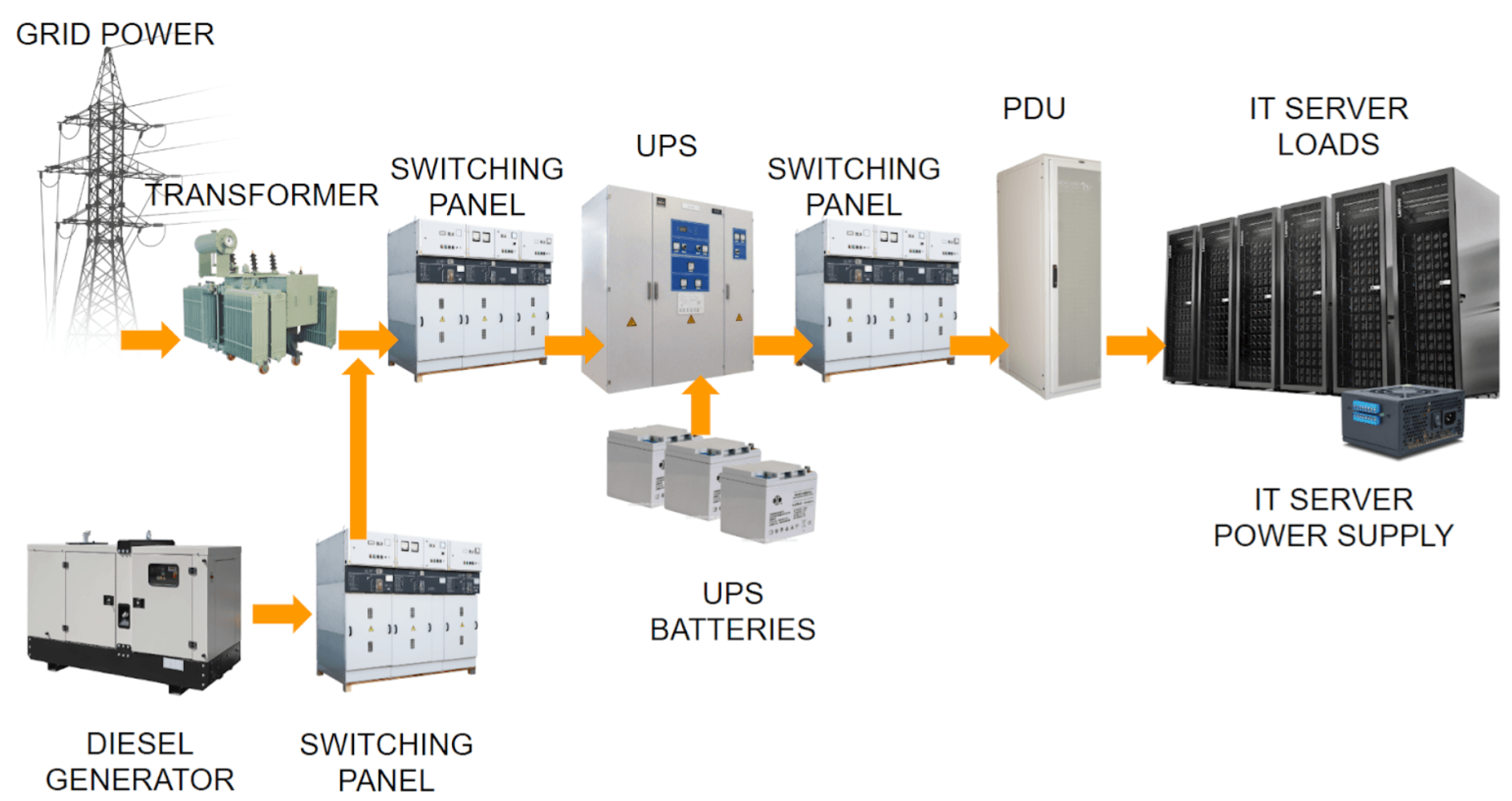
Data centres are dedicated complexes. They host the servers and infrastructure that power our digital world, including AI applications. Running them takes a lot of power and advanced cooling systems that keep performance optimal and protect key hardware from overheating.
How data centres work
Data centres are essential infrastructure for running large language models (LLM) such as GPT or LLaMA. These models need significant computing resources, which puts high demands on a data centre's energy efficiency.
A standard metric, PUE (Power Usage Effectiveness), measures that efficiency. It shows how much of the total power consumed actually reaches IT equipment (servers, storage, network devices, GPUs, and so on).
PUE is the ratio of the data centre's total power consumption to the power consumption of the IT equipment:
PUE = Total data centre energy consumption / IT equipment energy consumption
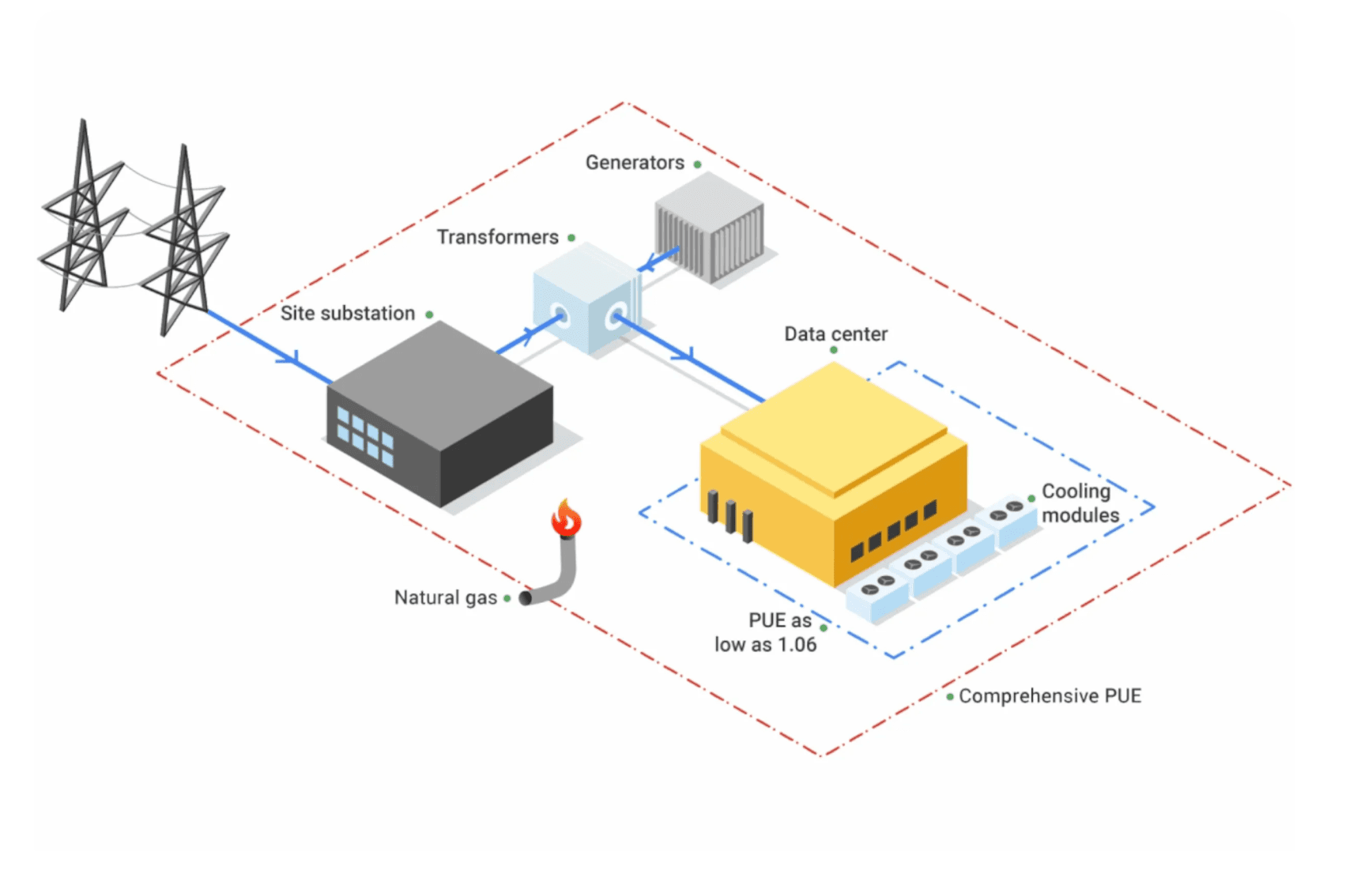
A value of 1.0 means perfect efficiency, where all energy goes directly to computing and nothing is lost on cooling, lighting, and the like. In practice, that value is hard to reach. Google's data centres, for example, hit an average PUE of 1.1 in 2022, with the best values around 1.07. The global average sat around 1.57, which shows how much room for improvement there still is.
Key components
-
Connectivity links devices inside the data centre and connects it to the outside world. It includes routers, switches, firewalls, and application controllers. Fast, reliable data transfer is essential for effective LLM training and inference.
-
Storage holds and backs up data. It includes hard drives, SSDs, tape drives, and backup and recovery systems. Fast NVMe SSDs are often used to keep latency low.
-
Computing equipment provides the computing power and memory that applications and services need to run. It consists of servers and other powerful machines, including GPU servers that handle the heavy computation behind LLM training and inference.
Types and categories of data centres
-
Enterprise data centres are owned and operated by individual organisations for their own internal needs. They can sit on internal premises or at external sites.
-
Colocation data centres offer space and infrastructure to organisations that host their own hardware. The provider supplies power, cooling, physical security, and connectivity.
-
Cloud data centres are operated by cloud providers such as AWS, Microsoft Azure, or Google Cloud. They let customers use compute and storage capacity on demand without managing physical hardware.
-
Edge data centres are smaller facilities placed closer to end users or to the devices that generate data. They cut latency and speed up data processing, which is key for applications like IoT or autonomous vehicles.
-
Hyperscale data centres are high-capacity facilities built for large-scale operation, often owned by technology giants. They hold thousands of servers and provide massive computing and storage capacity for services like cloud computing and big data analytics.
-
On-premise data centres give full control over the infrastructure, which suits organisations with strict data security and privacy requirements.
Uptime Institute data centre classification
The Uptime Institute created a four-tier system that classifies data centres by their ability to provide service availability:
-
Tier I, basic capacity. Availability 99.671% (max. 28.8 hours of outage per year). A single path for power and cooling, no redundant components. Suitable for small businesses with low availability requirements.
-
Tier II, redundant capacity components. Availability 99.741% (max. 22 hours of outage per year). A single path for power and cooling with some redundant components. Suitable for small to medium businesses looking for reliability.
-
Tier III, concurrently maintainable. Availability 99.982% (max. 1.6 hours of outage per year). Multiple paths for power and cooling allow maintenance without interrupting operation. Suitable for organisations that need high service availability.
-
Tier IV, fault tolerant. Availability 99.995% (max. 26.3 minutes of outage per year). Fully redundant systems (2N) withstand outages without service interruption. Suitable for critical applications where downtime is unacceptable, such as financial institutions or hospitals.
Infrastructure requirements for LLMs
-
Network throughput. Fast, reliable data transfer is crucial for LLM training and inference, especially when working with large datasets.
-
Security and compliance. When processing sensitive information, you have to secure the data and meet regulatory requirements such as GDPR.
-
Performance and cooling. LLM models need high computing power and generate significant heat. Efficient cooling is essential to keep operation optimal and protect equipment lifetime.
Cooling systems
Data centres use several cooling methods, and each one affects energy and water consumption differently:
Air cooling
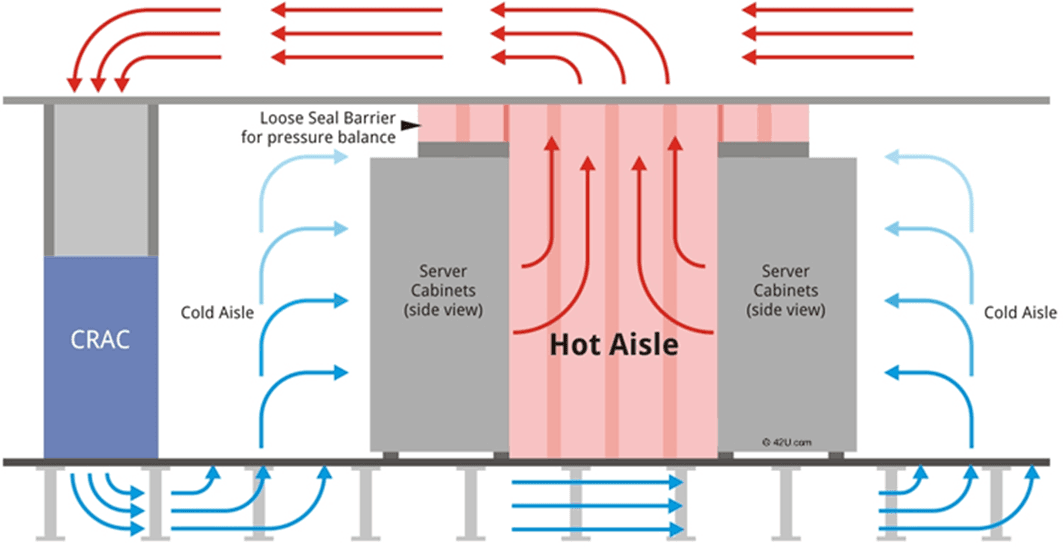
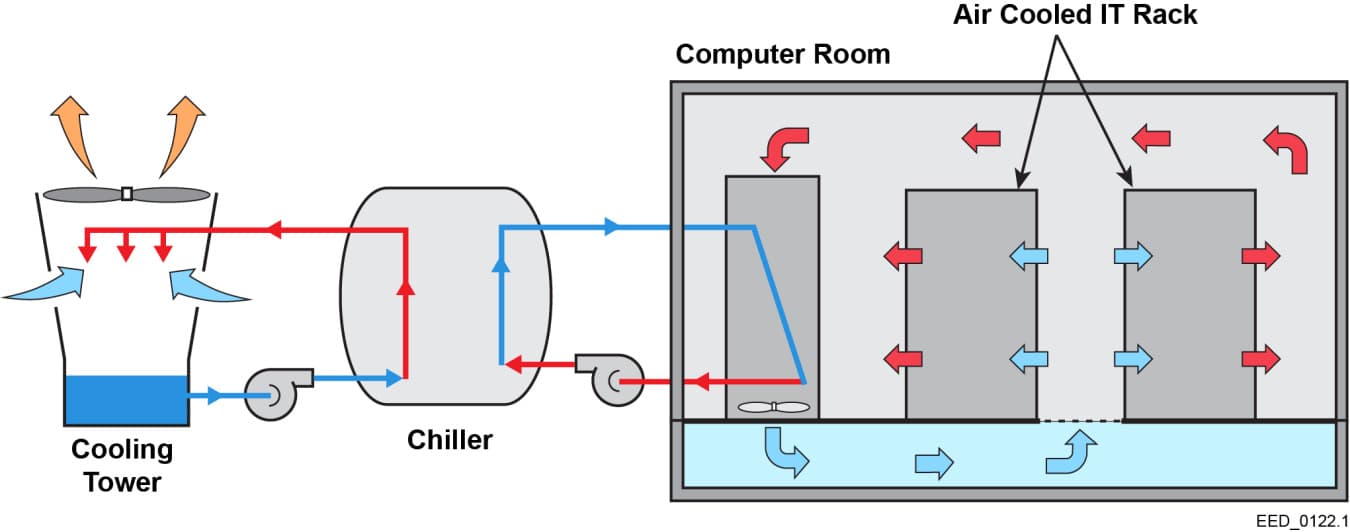
It removes heat from the servers using air, often through large HVAC systems. This method can be energy intensive because it has to power fans and cooling units.
Water cooling
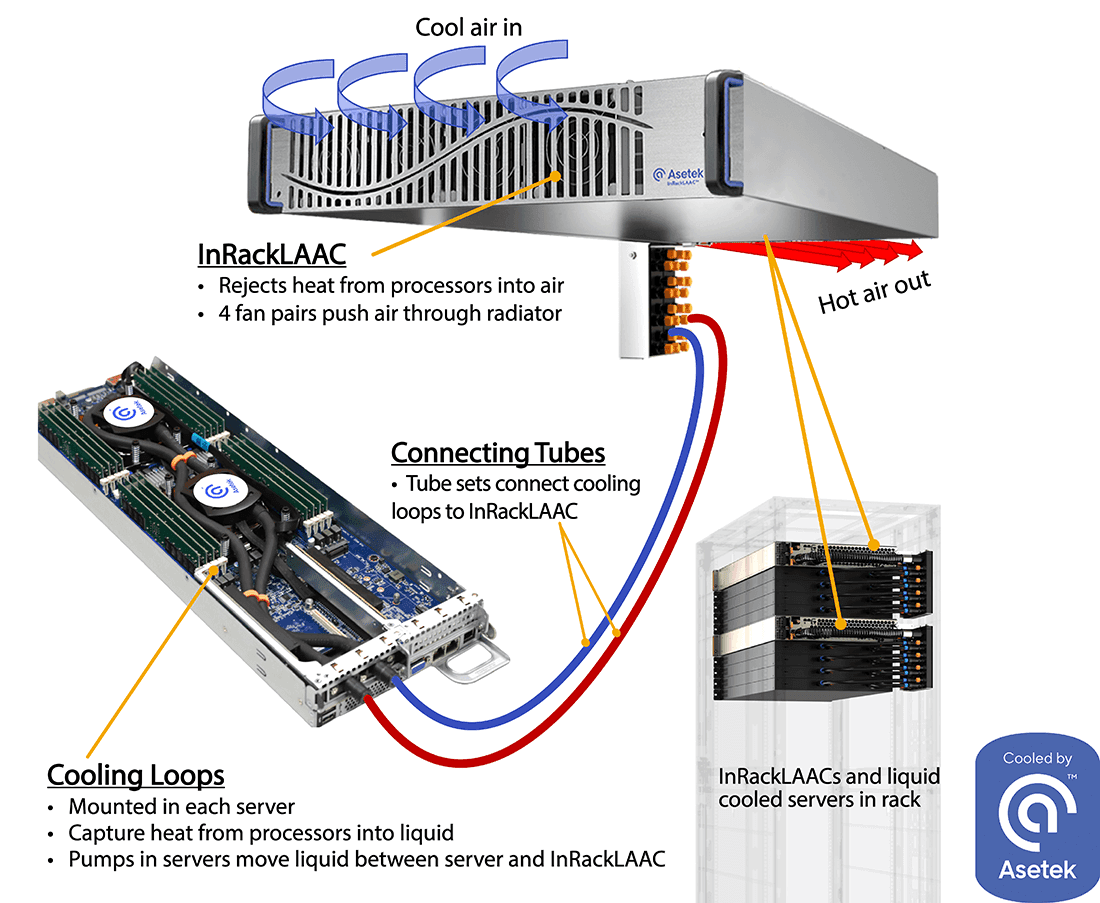
It circulates coolant directly through the components or through "cold plates" that absorb and dissipate heat. It is increasingly adopted because it is more efficient, though depending on the system it can mean higher water consumption.
Evaporative cooling
It cools the air or coolant by evaporating water. It saves energy but can raise water consumption, which matters most in areas with limited water resources.
Hybrid systems
They combine air, water, and evaporative methods to optimise performance and energy efficiency while balancing water and electricity consumption.
The ecological impact of AI and data centres
How data centres run translates directly into significant environmental impacts. As artificial intelligence becomes more woven into our daily lives, we need to understand what data centre operations mean for the environment overall, especially their massive electricity and water consumption.
Energy consumption
Total consumption. Data centres consume enormous amounts of energy. In 2023 they consumed roughly 4.4% of total electricity in the US, with an expected rise to 6.7-12% by 2028, mainly because of growing demand from AI applications.
Training AI models. Training large language models (LLMs) is extremely energy intensive. Training GPT-3, for example, required roughly 1,287 megawatt-hours (MWh) of electricity, equivalent to the annual consumption of about 120 average American households.
Inference. Beyond training, generating the answers themselves (inference) is also energy intensive, and the more users and queries the system serves, the more energy it takes.
Water consumption
Cooling requirements. Data centres use water mainly for cooling, which is essential given how much heat servers generate. In 2021, Google's data centres consumed roughly 16.3 billion litres of water, an average of about 1.7 million litres per day per centre.
Impact of AI workload. Deploying AI systems has demonstrably raised water consumption. Microsoft's water consumption rose between 2021 and 2022 by 34%, partly because of the cooling needs of applications like ChatGPT.
Water shortage problems. What is most worrying is that roughly two thirds of new data centres built from 2022 onwards sit in areas already facing high water scarcity, which makes the local water situation worse.
Linking energy and water consumption
The choice of cooling method in a data centre directly affects the ratio between energy and water consumption, and it is important to account for both the direct and indirect use of these resources.
- Air cooling often leads to higher electricity consumption but has lower direct water consumption.
- Liquid cooling, on the other hand, is more energy efficient but consumes a significant amount of water directly in the data centres.
- This trade-off between energy and water shows that cutting one type of consumption usually raises the other.
Visualisation and water intensity of data centres
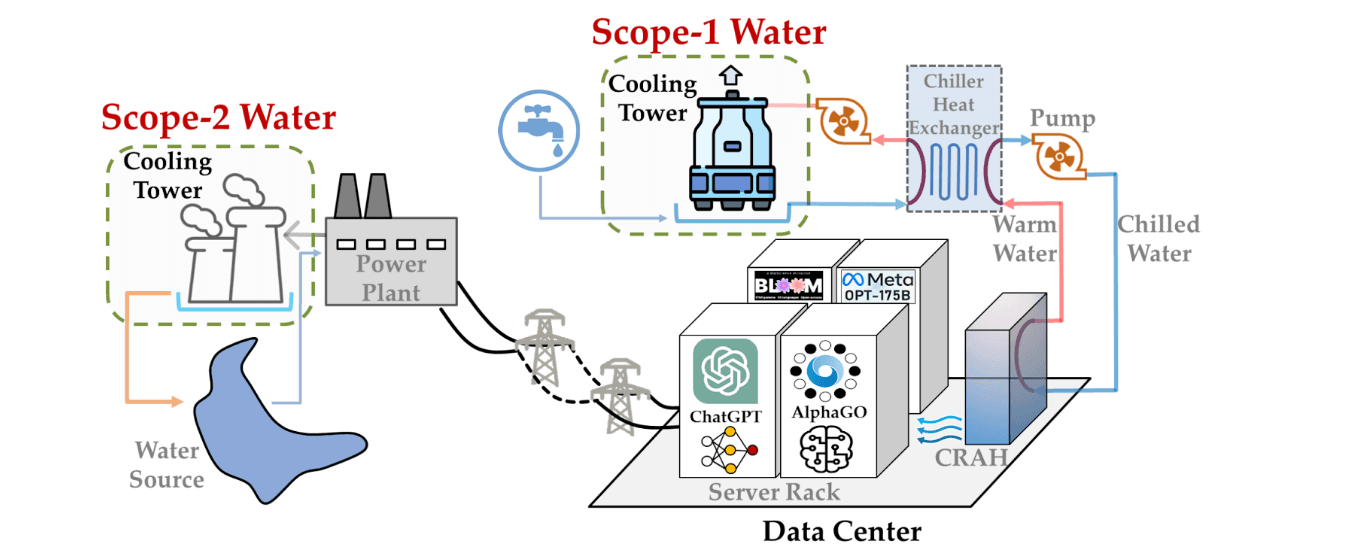
The figure below gives a clearer picture of how data centres work. Their high energy intensity, coupled with their connection to power plants, partly shifts the water load away from the centres themselves. Even so, the direct water consumption, especially in cooling systems, cannot be ignored.
Summary
The goal, then, is to balance the internal and external water demands of data centres, taking into account the natural resources available in a given region. As we mentioned in the previous article, you can sometimes ease excessive water consumption by shifting the load to less vulnerable areas or by using technological solutions, for example reusing excess heat or running closed cooling systems.
These are exactly the approaches and innovations that respond to growing environmental demands, and the whole AI and data centre sector focuses on them today. In the final article of this trilogy, we take a closer look at specific sustainability strategies and how wider society can help reduce our environmental footprint.
Related reading
Want to learn more about AI's environmental impact? Take a look at these related articles:
- The ecological impact of AI: What's going on behind the scenes? - Using AI is not without impact, every prompt triggers processes that consume both electricity and water.
- Sustainable approaches and innovation: how to reduce the ecological footprint of AI - Given its significant environmental impact, the AI and data centre industry is actively looking for innovative ways to reduce its footprint.
- AI in healthcare - How does AI help in healthcare? What can it already do and how has AI changed care?
- Top 5 misconceptions about AI - The use of artificial intelligence keeps growing. Yet we still run into inconsistencies and the assumptions that follow the whole world of AI.
Want to stay one step ahead?
Don't miss our best insights. No spam, just practical analyses, invitations to exclusive events, and podcast summaries delivered straight to your inbox.