
#2: How to implement self-management in your company
Length:
5 min
Published:
February 22, 2024
In the first part we covered what self-management is and the principles behind it. Now we get practical and look at how it plays out in real life.
When is the right time to think about self-management?
Without experience, the question "Is self-management right for us now?" is hard to answer, because change always carries risk. So do not jump in blind. Evaluate where you stand first, follow a few clear steps, and make an informed call instead of a hopeful one.
Here are a few situations where it is worth starting that conversation.
You are growing fast and your flat structure is starting to creak.
This is the moment to consider it. When a flat structure stops keeping up, you have two ways to scale. Pour money into management, in both headcount and quality, or hand more to the people who actually run the business and give them room to prove they can work on their own for a while.
You want a modern way of working, and your people already want autonomy.
That is a strong starting point. If this idea grew naturally inside the team, you are already halfway there. Everyone is on the same page, so now it is on you to open up communication, listen to the team's feedback, and define roles and responsibilities around self-management.
Most of your team works remotely, often across time zones.
Without in-person meetings, the traditional manager-to-employee relationship is hard to keep up, and that is doubly true for a team spread around the world that mostly works remotely with its own rhythm. Self-management fits this situation well. In exchange for taking more ownership, people gain real flexibility in how they organize their work lives.
What is the best way to start?
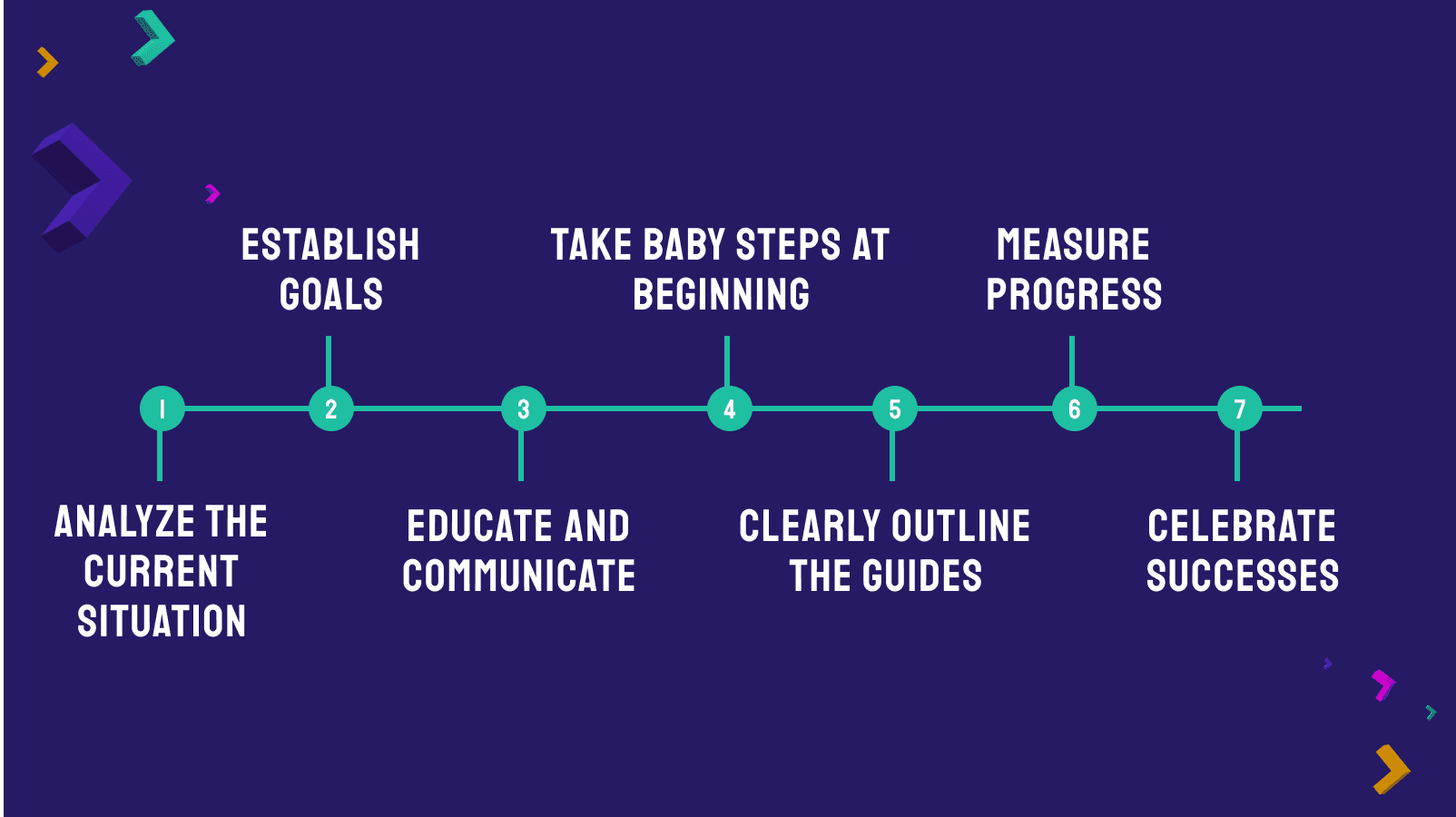
So what comes first, and in what order? We cut the whole thing into smaller pieces so the bigger picture is easier to see.
Look at where you stand
Start by examining the current state of the company and naming its strengths and weak spots. That gives you an honest picture of whether you can move forward with this kind of change.
Set the goals
Figure out the big picture, what you actually want to achieve, and work back from there. Then you can break it into small, manageable steps that lead to the target.
Educate and talk it through
No surprise here: education and communication carry the whole thing. An honest conversation with your team about your goals and plans gets you honest pushback and concrete ideas on how to do it better.
Start small
Diving deep is a bad idea when you are still learning to swim. Small steps let you measure how far you have come and plan the next ones with more confidence.
Write down the rules
Set ground rules so everyone is on the same page. That is what keeps self-management from turning into chaos.
Measure progress
Review your results as you go, the same way you reviewed the starting point. The analysis shows you what worked and where to adjust.
Celebrate the wins
Enjoy every win. Do not hold back when something goes well, say it out loud and hand out the credit.
How does it hold up in real projects?
In practice it is not all rainbows and unicorns. Like any management style, this one runs into problems and friction. Not everyone thrives under it, and some people will likely screen themselves out as a result. On the other side, when you let people decide and take initiative, you open up far more decision-making and strategic options for the company. In return you usually see more loyalty, which lowers turnover and the cost of training new hires.
In the end it is cheaper to pay experienced people well than to keep finding and training new ones.
Thanks for reading this far. We hope self-management makes more sense now after the deeper dive. If you have questions about any of it, reach out anytime.
You might also be interested in
Want to stay one step ahead?
Don't miss our best insights. No spam, just practical analyses, invitations to exclusive events, and podcast summaries delivered straight to your inbox.