
#1 What is self-management and how does it actually work?
Length:
6 min
Published:
February 6, 2024
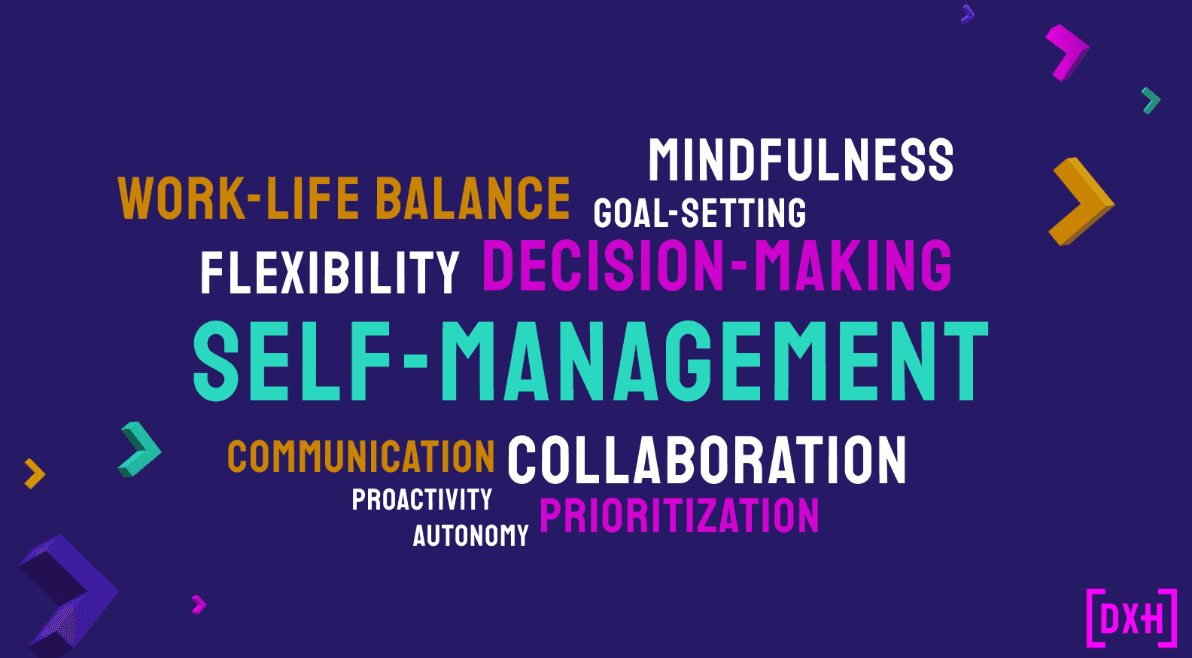
What is self-management at work?
Self-management, self-organization, self-governing. Whatever you call it, the idea is the same. People plan their own work, pick up tasks, and run projects without a manager standing over them. The team takes charge instead of waiting for instructions. It sounds good, and it often is. But every approach has tradeoffs, so we will look at those too.
Why consider self-management in the first place?
Three benefits stand out when teams move this way.
-
Lower management cost. When responsibility spreads across roles instead of piling up on a few managers, you can run leaner. Over time you may reach a point where a whole layer of middle management is no longer needed, which is a real line item off the budget.
-
Higher engagement. When people own their work, they care more about the company. That ownership tends to bring fresh ideas, better output, and lower turnover.
-
More agility. Teams that run themselves adapt faster, both to changing priorities and to new technology. You move with the market instead of behind it.

How do we make self-management work?
This is how we work at DXH, so we can say with confidence that it pays off. We did not get there overnight. Step by step we figured out the basics that hold for everyone, and these are the ones worth keeping in mind.
State your goals clearly. Before anything else, decide what you want to achieve and why. That tells you how far to go and in which direction.
Communicate openly. Communication matters in any setup, and this one is no exception. Agree with your team on how you will talk to each other: regular workshops, retrospectives, and an honest place to raise problems.
Set the ground rules. Even a free culture needs rules. Decide together how you communicate, how you deliver work, and how you reach your goals, so the freedom does not turn into chaos.
Build a feedback loop. No matter the field, feedback keeps you moving. With good feedback you take the next step with an open mind, and a clear way of giving it is what keeps the team's work on track.
Lead by example. The clearest way to show that self-management works is to do it yourself. Find what works for you, then share it with the rest of the team.
Common misconceptions about self-management
"Anyone can do it." Not quite. This way of working does not fit every profession or every person.
"Decentralized decisions mean no direction." The opposite is closer to the truth. Handing decisions to more experienced people often raises both productivity and the quality of the ideas that get heard.
"You no longer need leadership." You do. Even here someone has to point the team in the right direction and decide where the ship is headed.
"People will feel isolated." Only if you let them. You set the tone for the team: regular team buildings, retrospectives, or informal chats. Bring people together around shared experiences and no one feels alone.
"You set it up once and you are done." It is more like planting a seed. You keep watering and feeding it, or it stops growing.
In the next article we get practical. We will walk through the steps to put self-management in place and share the methods that have worked for us.
You might also be interested in
Want to stay one step ahead?
Don't miss our best insights. No spam, just practical analyses, invitations to exclusive events, and podcast summaries delivered straight to your inbox.